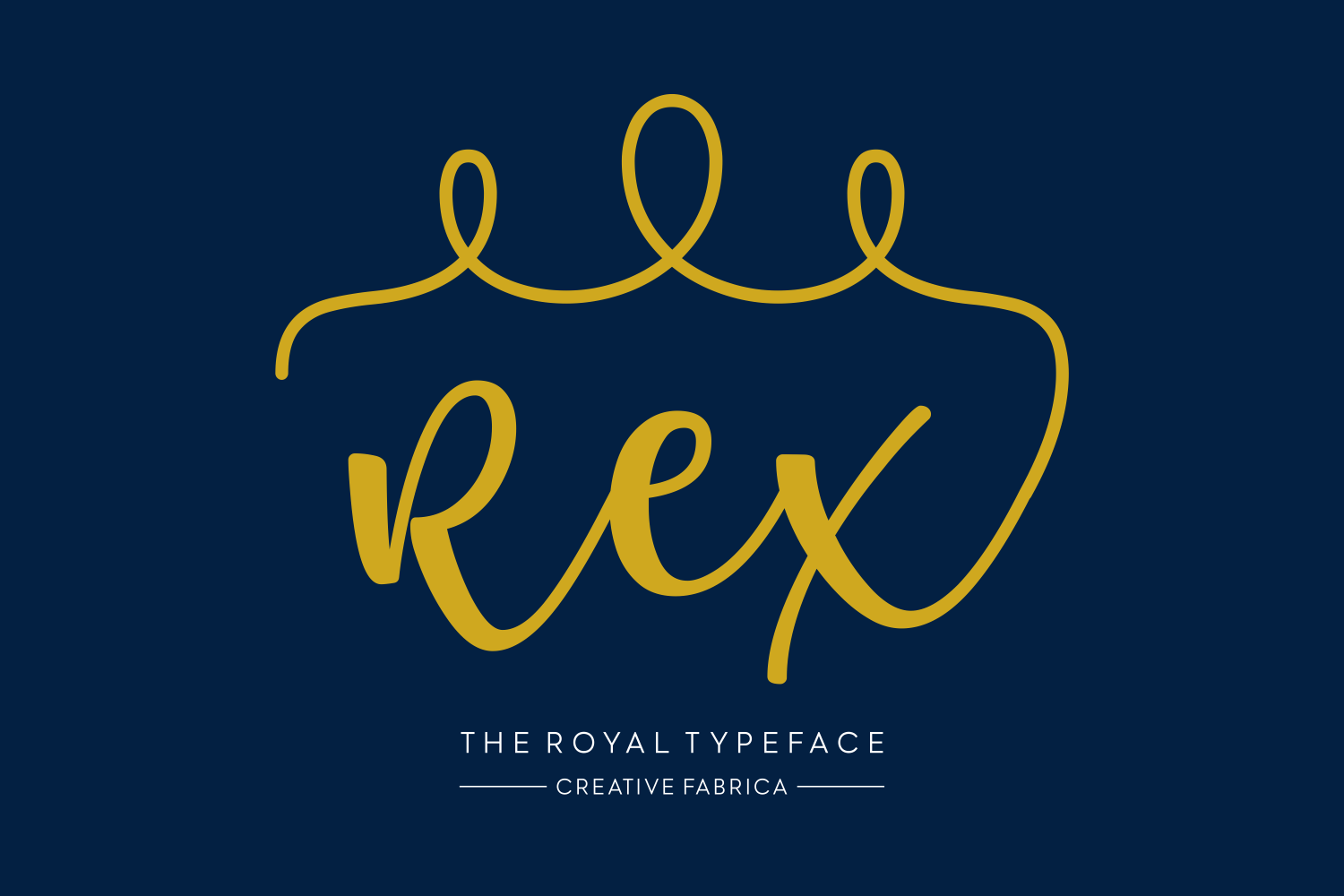
Rex Typeface: Royal Script for Modern Web Design
In the crowded landscape of digital design, establishing a distinct visual hierarchy is not just an aesthetic choice; it is a functional necessity. As web designers and UI creators, we constantly search for typefaces that can carry the weight of a brand’s identity while maintaining clarity across various screen sizes. Rex, a premium font from Script Amp, emerges as a compelling solution for those seeking to blend historical elegance with contemporary digital usability. The name itself, meaning "King" in Latin, hints at the authoritative yet refined presence this typeface brings to any layout.
Visual Personality and Digital Appeal
Rex is best described as a royal typeface with a modern twist. It belongs to the script font category but avoids the excessive flourishes that often hinder readability on screens. Instead, it offers a balanced approach to decorative typography. The characters feature clean lines and confident strokes, providing a sense of sophistication without sacrificing legibility. For a digital product creator, this balance is crucial. A font that looks beautiful in a static mockup but fails to render clearly on a mobile device is a liability, not an asset.
The inclusion of swashes in Rex adds a layer of customization that is particularly valuable for branding. These super swashes allow designers to add unique accents to headlines, making them stand out in hero sections or banner ads. However, the core strength of Rex lies in its versatility. It functions effectively as a display font for high-impact areas while remaining cohesive enough to support a broader brand identity. Whether used for a luxury boutique online store or a high-end coaching website, Rex communicates professionalism and attention to detail.
Strategic Placement in Web Layouts
Understanding where to deploy a script font like Rex is key to maximizing its impact. It is not designed for body copy. Instead, it thrives in areas where visual hierarchy needs to be established quickly. Here are several practical applications for web designers:
- Hero Sections: Use Rex for the main headline on landing pages. Its distinctive character draws the eye immediately, setting the tone for the user journey.
- Call-to-Action Areas: While not suitable for small button text, Rex works well for larger CTA headers that precede a conversion point, adding emotional weight to the offer.
- Blog Graphics and Headers: For content-heavy sites, using Rex in featured images or section breaks can break up monotony and guide the reader’s scanning behavior.
- Logo Design: For brands seeking a creative font that feels both established and fresh, Rex provides a strong foundation for logo text, especially in fashion, beauty, or artisanal sectors.
When designing for conversion-focused layouts, the goal is to reduce cognitive load. Rex achieves this by offering instant recognition of tone. Users subconsciously associate the refined curves of the typeface with quality and trust. This psychological effect can significantly influence user engagement, particularly in industries where perceived value is a primary driver of sales.
Readability and Responsive Considerations
One of the most common pitfalls in using script fonts is poor performance on smaller screens. With Rex, careful attention must be paid to sizing and spacing. On desktop views, the font can be displayed at larger sizes to showcase its intricate details and swashes. However, for mobile screens, it is advisable to simplify. Disable complex alternates if they cause rendering issues or visual clutter at smaller pixel dimensions.
Contrast is another critical factor. Rex performs exceptionally well on light backgrounds, where its dark strokes create sharp definition. When using the font over image overlays, ensure there is sufficient contrast between the text and the background image. A semi-transparent overlay or a solid color block behind the text can help maintain readability without compromising the aesthetic. For dark mode interfaces, test the weight of the font carefully; sometimes, lighter weights of script fonts can disappear against dark backgrounds, so opting for a bolder style within the family may be necessary.
Effective Font Pairing Strategies
A decorative display font like Rex rarely stands alone in a comprehensive web design system. It requires a supporting cast to handle the bulk of the information delivery. The most effective pairing strategy involves combining Rex with a clean sans serif font for body copy. This contrast creates a dynamic tension that keeps the design interesting while ensuring that long-form content remains easy to read.
For example, pair Rex with a geometric sans serif for a modern, tech-forward look, or with a humanist sans serif for a warmer, more approachable feel. If the brand identity leans towards editorial design, pairing Rex with a classic serif font can create a sophisticated, magazine-like aesthetic. The key is to ensure that the secondary font does not compete with Rex for attention. The script font should remain the star, used sparingly for emphasis, while the supporting font handles navigation, paragraphs, and functional UI elements.
Licensing and Technical Implementation
Before integrating Rex into any client project or digital product, it is essential to review the licensing terms. Commercial font licensing varies depending on the usage. For websites, ensure you have the appropriate webfont license, which typically involves hosting the font files on your server or using a provided CDN link. Check the included file formats to ensure compatibility with all major browsers. Most modern premium fonts come in WOFF and WOFF2 formats, which are optimized for web performance.
Additionally, verify multilingual support if your target audience is global. A robust typeface family will include extended character sets to accommodate various languages. Finally, explore the full range of styles and alternates included in the package. Understanding the full capabilities of Rex allows you to create a more nuanced and flexible design system, ensuring consistency across all brand assets, from social media graphics to packaging design.
In conclusion, Rex offers a powerful tool for digital creators who value both form and function. By respecting its strengths as a display font and pairing it wisely with functional typefaces, designers can elevate their web projects from ordinary to exceptional. It is a testament to how modern typography can honor the past while serving the needs of the present digital landscape.